In today’s world, dominated by AI, texting, and endless Teams chats, it feels like actually talking to someone on the phone has become an ancient practice. But here’s my take: nothing quite replaces the value of a real conversation—outside of in-person collaboration. Yet, somehow, picking up the phone has become the exception rather than the rule.
There’s a noticeable reluctance, even an avoidance, of making phone calls. Call me old-fashioned, but I believe something important gets lost when we only communicate through a screen. You can’t fully capture tone, inflection, or intent in a text—not to mention the nuances of human emotion that simply don’t translate through the tap of a keyboard (emojis only get you so far, right?). I’d much rather have a focused 10-minute conversation that ends with clear next steps than spend time piecing together a 500-word essay through texts or emails.
A recent CNN article shed light on the growing epidemic of loneliness, especially among younger generations. No, I’m not saying phone calls will cure all, but they can help bridge the gap. There’s something comforting about hearing someone’s voice, about making that personal connection—even if it’s just over the phone.
So, next time you’re about to type out a long message or email, take a second and ask yourself: Would a quick phone call be more productive? Would it be more meaningful? Chances are, the answer is yes.
During my career working on numerous accounts, I’ve had the pleasure of being around some of the best account leaders in the business. Based on this experience, I feel account management secret sauce has three key components:
Relationship: building strong relationship foundations – internally within the agency, partners and clients, is key to long-term success.
Creative Excellence: helping shepherd the creative process to ensure creative is as strong as possible throughout the development process – from helping make sure the brief is grounded in client insights, to answering questions, to selling in the core ideas and concepts, to bringing it to life.
Passion: having the drive and never settling approach built within your DNA.
With these core components top of mind, below are the 10 keys to account management:
Invest in Client’s Business.
Invest in truly understanding the client’s business. Everything from reporting structure, key stakeholders, their industry, product portfolio to their stock price. How are they positioned against their competitors? Is their collective business doing well? Make sure you sign up for news feeds to help stay on the pulse of their business.
From an individual client standpoint, get to know what they like and don’t both professionally and personally. What are their “hot buttons”? What type of creative do they like? Do they like sports? Ask to follow on social. Especially the lead clients, you are going to spend a lot of time together. It’s always good to have a professional friendship.
Identify the “Win”.
Need to analyze how do you win on each given account. Is it an account that could be a creative showcase? Does it have the ability to grow? Is it a profitability play? This insight will help in guiding the agency and team towards the win. And it can help ensure that the agency isn’t trying to accomplish something that isn’t possible.
Find the “Why”.
In a lot of cases, people go right to the solution, including clients. Some feel it’s being helpful or could be because it’s perceived as the faster route. But the key is to get to the core reason why something is being asked. For example, if there are requested changes, find the why are clients asking for the change in addition to what the actual change is. Dig deeper and figure out why it’s asked, and then come back with solutions that tackle it.
Listen.
Stay on the pulse of what is going on within the account. From a client perspective, how happy are they with the agency’s performance? Are they working well with the collective team? Is it taking one round to nail a concept or multiple and is there a growing frustration with having a lot of rounds of feedback. Directly ask for continuous client feedback to eliminate vagueness, which can only slow down the account. And then act accordingly.
From an internal perspective, how happy is the team? Are they learning and growing? Are they challenged, too much or too little? Are they enjoying working on the account? Is there enough resources or too many (which can have the same negative effect as too little). Listen and then act accordingly (nothing worse for an employee having to say the same thing over and over without something being done about it..)
Easy to Buy.
Leverage the insights, experience, and history that you have about the business and clients and aid the team in making it easy for clients to buy the ideas. Predict what the response will be and create preemptive logic that addresses client concerns even before they ask. This demonstrates that you are prepared and understand their business.
Lean In.
Titles in the grand scheme don’t matter. Be available to help in any way possible. Be there to quickly answer questions. If the team needs lunch because they have been sequestered trying to solve a challenge, go get lunch. Go above and beyond to support the team.
The Art of “No”.
It’s hard to push back. To say no. It’s really easy to say “yes”. To take orders and pass them along. But that’s not what strong account management is about. There is an art to saying no. Give clients alternate solutions that help address their original ask that you can’t deliver on.
Wear Multiple Hats.
Account managers wear multiple hats. From helping create briefs, manage projects, developing strong presentations, developing spreadsheets, reviewing routers and selling in ideas. The key is being comfortable going quickly from one task to another, depending on the urgency and importance.
Build Equity.
Just like in equity in houses, building equity with clients happens over time. The more you invest, usually the bigger the return. Think of it as if you had equity poker chips. Those chips are for you to use at your discretion to manage the business. Once you have equity built up you exchange this equity for asks – maybe it’s discussing a new business opportunity or discussing something you know will be a tough conversation. You leverage this equity. It’s precious so choose when to use it wisely.
Collaborate.
A big key is collaborating across the business, including with partners. This is made harder when those “partners” are competitors that you could come across when pitching other businesses. Be open-minded and know they too are trying to do good work as well. You have to remember to always do what’s in the best interest of the clients and their business.
Lastly, try to carve out moments for fun. Account management is hard and sometimes under-appreciated. It’s a vital role in developing great work for clients. Good luck.
If you would like to know more or have any account management questions, please email: brianphelps10@gmail.com.
Disney is on fire. They have owned the box office for the last couple years, with 2018 worldwide sales being $7 billion. This year sales are expected to be higher thanks to an amazing lineup featuring Captain Marvel, Avengers Endgame, Aladdin, Toy Story 4, The Lion King and later this year Frozen 2 and Star Wars IX.
Building on that momentum, on November 12, Disney+ launches, which will rock the streaming world as we know it. Disney, Marvel, Star Wars, Nat Geo and Pixar programming will now be centrally located within this streaming service. At D23 (the official Disney Fan Club and named after 1923, the year Walt Disney founded the company) the stars came out and discussed the launch. A ton of new content is coming: Star Wars spinoff the Mandalorian, Marvel She-Hulk, Marvel Moon Knight, The Falcon and The Winter Soldier, WandaVision, Loki, and What If?, live action Lady and the Tramp and Obi-Wan TV series are just a few highlights. And more to come….
Comic-Con Chicago
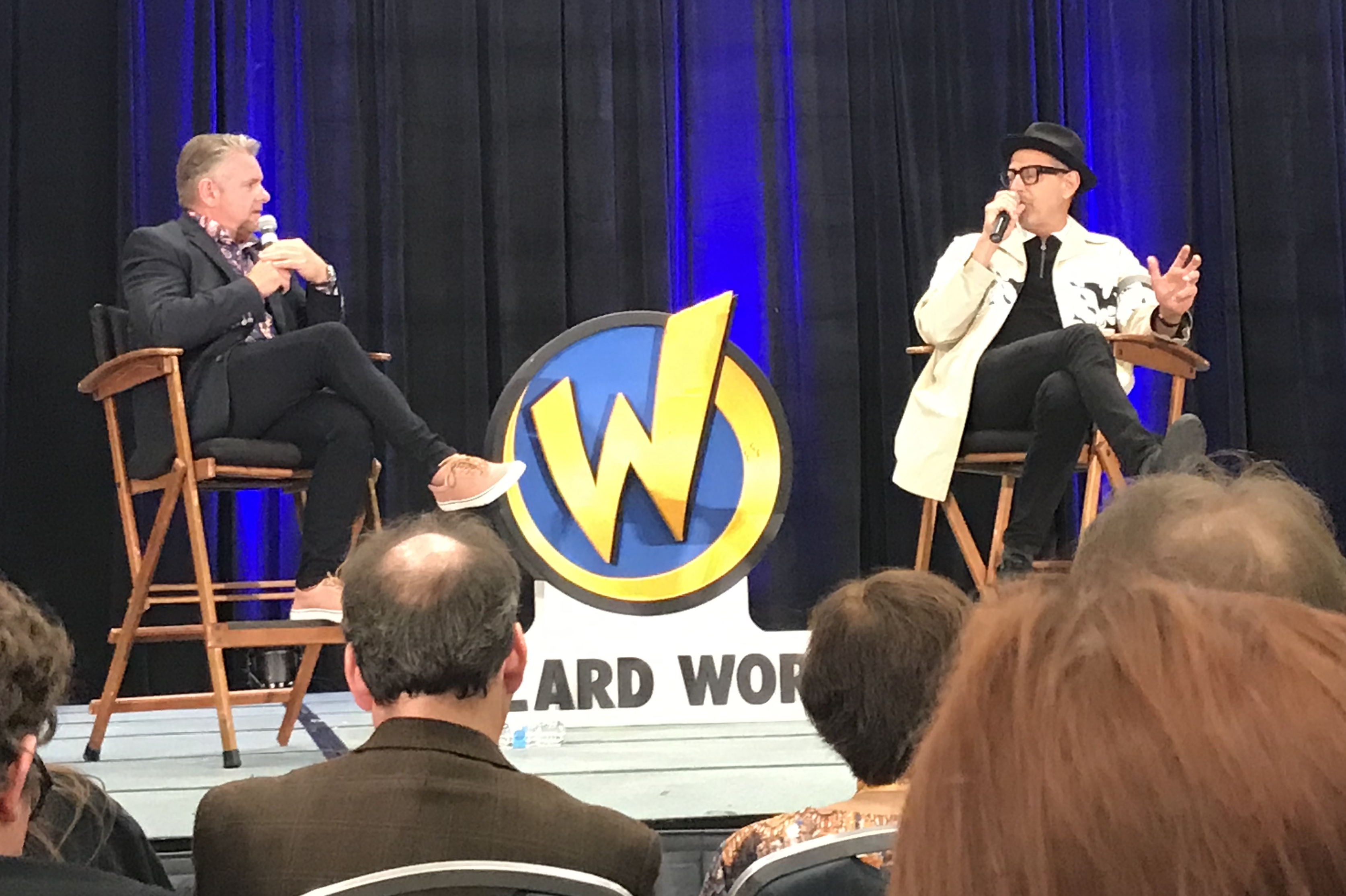
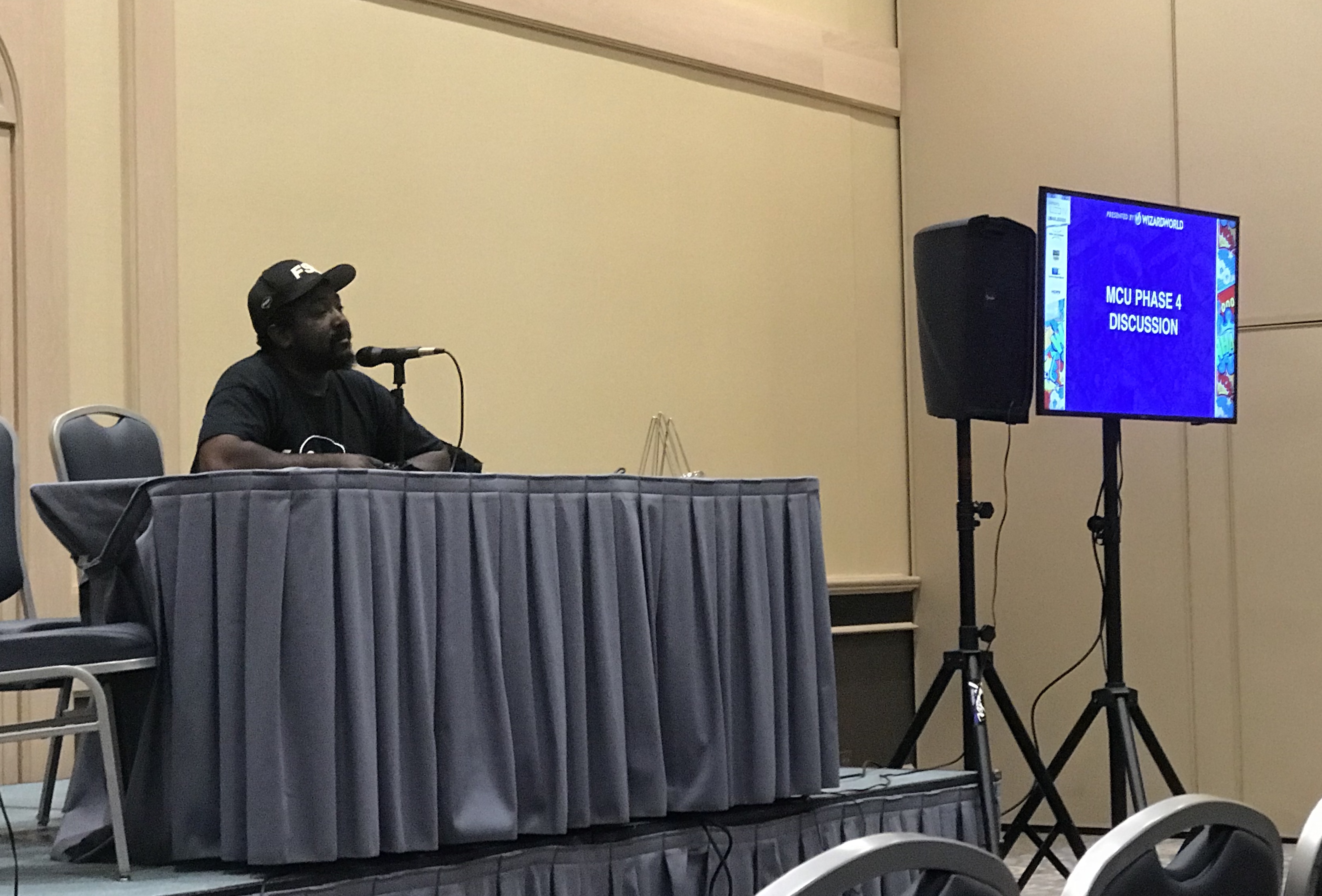
On the heels of Disney+ convention was Comic-Con Chicago last week as well, which I had the pleasure of attending. Disney+ was a hot topic given the Marvel connection. Stars came straight from Disney23 convention like Jeff Goldblum. He’s launching a new series on Disney+ called The World According to Jeff Goldblum. Comic creators, like Mike Watson, speculated on the impact of the move to Disney and where the Marvel franchise is going coming off the Marvels EndGame. Several theorized that women heroes will become the primary focus like the Captain Marvel movie. Another hot topic was what the impact will be to Spiderman, with Sony (Spider Man rights holder) and Disney supposedly not getting along. The concern is Spiderman not being in future Marvel films. I assume money wins and they will figure out a solution.
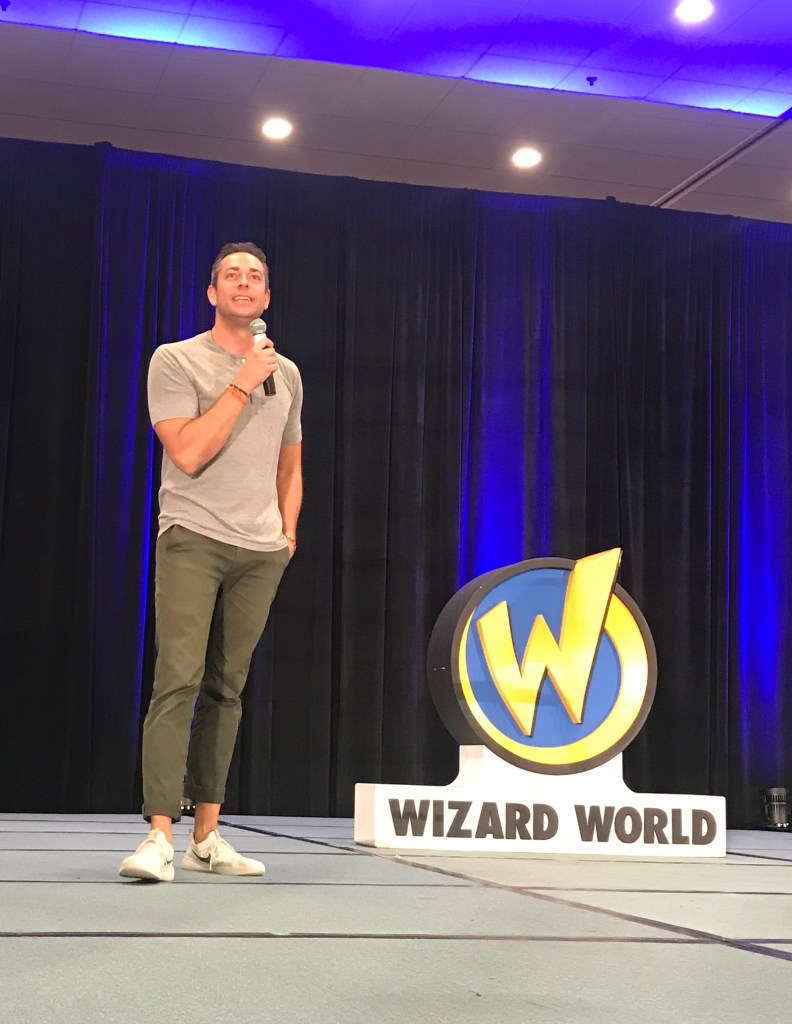
Given that this was my first Comic-Con, I wasn’t sure what to expect. But it was actually a lot better than what I was envisioning, with the highlight being Zachary Levi, most recently the star of Shazam. He had an open ended, fan Q&A session where nothing was off limits. He touched on being typecast from the Chuck series, how he loves the Shazam role (being able to play a 14-year old kid who turns into a super hero), to his struggles in his personal life. At one point he got choked up and was very genuine. The audience appreciated his openness.
If you have debated attending a Comic-Con, I’d recommend going. Chicago is smaller than the main one in San Diego but still a ton to do – talented artists with amazing illustrations, anything and everything comic related for purchase to Q&A, trivia and meet and great of celebrities – from Rookie of the Year to WWE wrestlers, to this one having John Travolta (ha).
Some topics and stars don’t have a natural tie in to “comics” but just shows you how this comics are no longer just a niche, it has truly crossed over to mainstream. And here to stay.
Impact on our Space
The importance of Disney will only grow as they become bigger streaming content creators. If there is anyone who knows how to do content, it’s Disney so I am fully confident they will be successful. The impact to Netflix is already ongoing, losing several series that were unique to Netflix. And their stock price is trending down as of the last several months. It will be interesting to see their response as well as consumers – will people now pay for both, drop Netflix for Disney+. It will especially be interesting to watch what parents do as Disney+ is not going to have programming higher than PG-13. Also, the impact to ESPN+ and Hulu connections all being figured out as well.
As the streaming space continues to become more and more fragmented (Netflix, Amazon, Hulu, and now Disney+) and still some favoring traditional cable, what is the breaking point?
I’ve turned into a coffee drinker (if you consider hot skinny venti vanilla lattes coffee….). I never thought it would happen. But working remotely, bouncing from client to client, I find myself working out of coffee shops, mostly Starbucks, and drinking coffee.
And I’m not alone. The amount of people working remotely is higher than ever before. One major factor is the “gig economy”, defined as a labor market characterized by the prevalence of short-term contracts or freelance work as opposed to permanent jobs. Intuit predicts that by next year, 43% of the American workforce will be attributed to the gig economy.
The benefits of working out of coffee shops are high, including the noise helping be more creative, escaping day-to-day distractions being able to focus more, and the rub off effect of seeing others there working hard.
So now being a coffee aficionado and spending a lot of time at Starbucks, below are my top 8 learnings:
Store Layout
Just like types of drinks, there are a ton of different store layouts. Seems like every location is just a little different, which is a good thing. Explore to find which one you prefer best (large/small/narrow, etc.). Given the diversity, I like to rotate between different locations.
Use the App
The Starbucks app is fantastic. As a loyalty member, you get free drinks/food once you hit a certain threshold. It also helps speed up the ordering process. I haven’t attempted to use the pre-order functionality, preferring to order from a human.
Dress Warm
Even in the summer, plan to bring a sweatshirt. They kick up the air conditioner, which they say is due to helping prevent the employees from getting overheated. Be prepared.
Comfortable Seating
All about personal preference but most have several different options for what type of seat/table to work in. The key is finding one that you like as you’ll be there for awhile. Really nice are the tall bar seating along the window.
Power Up
Another key is finding a great location that is near power cords. Kind of amazing that more table locations don’t have accessibility to outlets.
Stretch
Make sure to walk around and stretch your legs. Don’t recommend longer than about four hours at one time.
No Conference Calls
Don’t be that person. If you need to take or make a call, go outside. Or go sit in your car. No one wants to hear your conference call.
People
You never know who you will run into. A lot of great people work there. Able to choose to converse with others or tune out with ear buds.
Yesterday at a local Starbucks while waiting for a client meeting to start, I looked up and someone was talking to me, saying “Yea,I’m homeless“. Not sure what to say to that, just uttered ok. Obviously down on her luck. Ended up getting a gift card that said “You’re Awesome” and then had an employee give it to her after as I left. Hopefully it helped make her day a little better.
So each day is different. Different environments. Different experiences. Enjoy!
All clients are important. They should be made a priority, respected and given 100% effort to help them solve their business problem(s).
Each client is different. Maybe they’re focused on consumer communications. Or B2B. Maybe they’re looking for more strategic help or creative or having a production focus. Some have smaller budgets and some larger. Some are focused on blocking and tackling deliverables and some on winning awards. Much too often a one size fits all treatment is used by agencies. The agency solution must be customized to each client’s needs. These differences should be a consideration when building and managing an agency.
Another consideration is diversification. In today’s climate, the importance of diversifying continues to grow. With the average client relationship lengths decreasing, in-house studios growing and total budgets shrinking, having a diverse client set of clients to mitigate the risk of loss is important.
One way to view diversification is by looking at the agency client roster as a portfolio, just like the stock market. We all took an introductory finance class that talked about putting stocks into four categories:
RISING STARS: High market share in a growth market
QUESTION MARKS: Low market share in a growth market
DOGS: Low market share in a slowing market
CASH COWS: High market share in a slowing market
The same approach can be used for analyzing your client roster:
STARS: established clients that want/expect award-winning, breakthrough work. Ability to create great work to propel them upwards.
COWS: stable clients that have a large volume of work, potentially needing blocking/tackling support and where the ability to do breakthrough work is less common. They are a known brand and are of good size.
QUESTION MARKS: less established clients that with breakthrough work, could springboard their business to become well-known.
DOGS: hopefully you don’t have any of these but it could be a relationship that is trending the wrong way. Or there aren’t a lot of opportunities.
So to develop a client portfolio strategy:
For each client, determine which bucket they fit into. Be transparent/realistic.
Once done, look at how diversified your offering is as across the total agency.
Determine where there are gaps (in general, it’s good to have a few in each of the main three categories).
This strategy can help you manage your resources and agency effort, as well as when tied in with your new business strategy, help identify areas of growth.
So, what does your agency’s client portfolio look like?
We have been trained to think we must be specialized in something. To focus all our energies. Because the belief is, to excel you must have a singular focus. Even at a young age. Look at athletics. Kids are told to choose a sport rather than enjoy multiple. 100% focus on baseball rather than enjoying other sports like football, tennis, and soccer. Or to specialize in one instrument rather than experiencing and enjoying a range of instruments.
The same is true in the workplace. Are you an account person or strategist? Business or creative? Art director or writer? So that the goal is you can do that function over and over again and excel at it through repetition. And thereby make more money.
Well, it’s a myth. Empirical evidence shows that “hybrids” or “generalists” (a term that itself is poor, giving the feeling you are an expert in nothing) are stronger, better for organizations, and will be more successful. They’re more creative, more agile, and able to make connections their more specialized peers can’t see.
Taking it a step further, with AI and the power of machines, specialists will be replaced by automation, making the need to have deep generalists only continuing to increase.
We are starting to see the growth of hybrids being recognized as a positive in the advertising industry. One tangible example is the “growth” of Chief Growth Officer. Adweek recently discussed this role, as the name implies, to drive growth—but in ways that serve internal functions (build cross-functional teams) and external (keeping an eye on customer demand; what does the consumer want from us?).
As you probably can tell I am a big fan of hybrids. I’m a little biased as I consider myself a hybrid, having played different roles throughout my career – from account to operations, new business, and strategy. Knowing and excelling in a wide range of areas, in my opinion, is critical to having a successful team, especially in a leadership position. This way you understand what it takes and you should have more empathy towards the team members who do the work.
However, I’m not completely dismissing the role of specialists. I think they have value, with the key being developing a ratio/balance of hybrids and specialists for the greatest success. For example, 70% hybrid with 30% specializing in specific tasks, like SEO, etc.
From an efficiency standpoint, it’s also better having one person that is can do more topics rather than having to pay for several people.
So the questions for you is: are you a specialist or hybrid? Do you agree in the power hybrids? And what is the ratio across your team?
Starting this journey a few months ago has been a roller coaster – fun, challenging, had its up and downs and a little scary. I’ve enjoyed the flexibility and the ability to carve out my own path. In this short amount of time, I’ve learned a lot on this journey, including:
Crazy hard.
I have always been impressed and admired those who have had the courage, confidence, and determination to go out on their own. Especially those whose hard work pays off and can create something successful and impactful.
Unlike large organizations, it’s all on you to create success. Given this, it’s a ton of work. The amount of foundational work at the point of creating is high. and includes LLC creation, tax info, branding, templates, and platforms like your site, etc.
Three paths.
A key is being able to multitask – juggling building a brand, working on initial client business, and prospecting for new business to continue to grow. Each one is critically important. If fortunate, you have to do in parallel.
It’s always important to have each touchpoint be strong but crucial when starting out. Each one is setting a tone for things to come.
People business.
I have always had the opinion that relationships matter. Your network. Understanding who is great already so you know who to leverage when you need help. And you’ll need help.
But I’ve never really invested the time for connections as much as I should have. Networking, conferences, etc. Something that I’ve learned matters and focused on doing in the future.
Smile more.
Studies show the power of smiling. People want to interact and spend time with people that smile. Yea. Ha. I’m a pretty even keel person and don’t show emotions. This serves as a nice reminder to pump up the energy and emotions.
Continuously learning.
Starting something brand new there are a ton of unknowns. Leverage online tools, networks, and LinkedIn to continuously learn.
Not a ton of fun, but having a financial game plan is crucial. Work with an account and financial advisor that you trust to make sure the foundation is strong. Also, make sure you have contracts with those that you pull in. I’ve learned this one the hard way.
The small things.
Don’t let being “busy” be an excuse to not do the little things. The term busy is I think a trap. It’s an out to not do things you should do. Send a note back to someone who reaches out of the blue. Go to coffee with an old acquaintance. Reply to an email, even if just a couple of words. Help someone that could use it. Carve out time to make these things happen. I was pretty bad at this.
Templates
Don’t reinvent the wheel. Leverage the templates/content sources that are out there that you can customize. And wow, are there a ton. Test them out and see what you like best. Then document which ones you like. Here are a few of my favorites:
Envato: templates for designing everything from presentations in keynote to designing communications.
Unsplash: stock photography that you don’t have image issues and is free.
Are you a Tiger or a Roger?
There’s a great book called Range: Why Generalists Triumph in a Specialized World. Everyone knows Tiger Woods’ story. Child golf prodigy when most kids are learning how to talk and walk. But did you know that arguably the greatest tennis player that ever lived grew up playing multiple sports, focusing much later on tennis?
Most think the best route in life is to specialize in something. This book contradicts this opinion and outlines why being a generalist/hybrid is a better path. So the question is, which one are you? I’ve figured out that I’m a hybrid.
Determined.
So it’s early. Still learning and enjoying the journey. The key is staying determined and focused. For those out there doing the same, congrats and best of luck.
We’ve all seen TED Talks. There’s a lot of them. But I recommend taking less than 18 minutes to watch the founder of Chobani Hamdi Ulukaya’s talk on leadership.
CEOs play an instrumental role in business. They set the tone for the ship. The term Anti-CEO is, in my opinion, is a little drastic but his story and points are compelling.
Grounded in the American dream, he created a billion dollar company by starting with an abandoned yogurt factory, and led by four key principles: Grattitude, Community, Responsibility & Accountability:
Grattitude:
Businesses should take care of their employees first. Not the balance sheet or shareholders.
Community:
Ask what you can do for your community rather than what your community can do for you.
Responsibility:
Businesses must take a side in politics. Touchy topic in today’s climate. But agree that businesses can have a huge impact on our world.
Accountability:
CEO reports to the community. Everyone is empowered to make change. And consumers should reward those businesses that are doing it right.
His recap is spot on:
Right with people.
Right with community.
Right with product.
You will be more profitable. More innovative. More passionate people and you will have a community that supports you.
Already a fan of the product, knowing who is at the wheel and their story, will remind me which yogurt I should grab next time at the store.
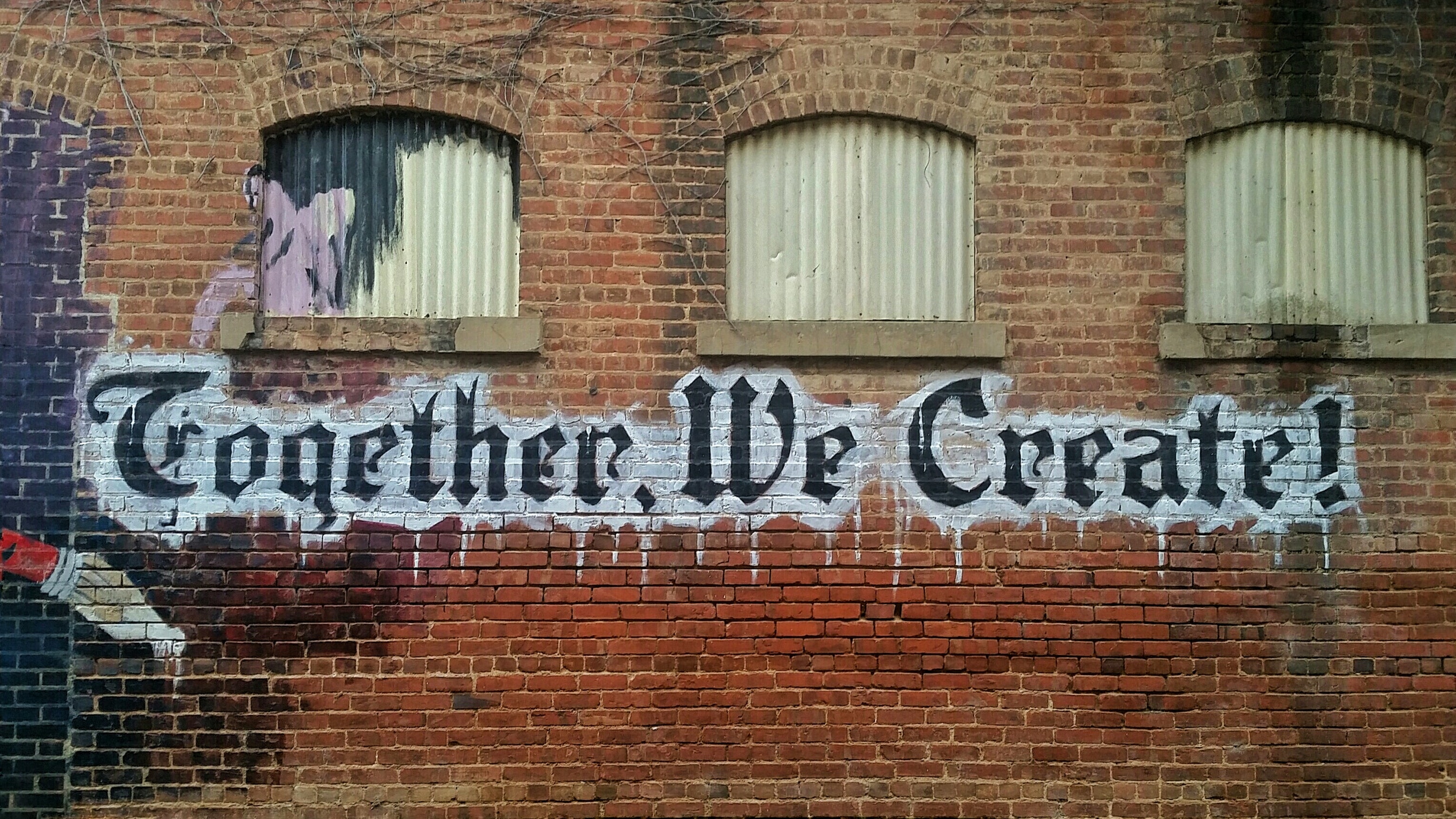
“The ratio of We’s to I’s is the best indicator of the development of a team.” – Lewis B. Ergen
The smallest words can have a huge impact on a team, both directly and indirectly. This includes using “we” as a replacement to the term “I” in your daily vocabulary. Harvard Business Journal published a great article about the power of “we”. It cites research from Journal of Language and Social Psychology and finds:
When people feel insecure, self-aware, or diminished, they are more likely to focus their thoughts, feelings, and behaviors inward.
By contrast, the researchers theorized that individuals using first-person plural and second-person (such as “we,” “us,” or “you”) ought to demonstrate an outward focus, considering the thoughts, feelings, and behaviors of others.
Individuals with lower status overwhelmingly tended to use first-person singular pronouns (“I”).
Likewise, higher status individuals used significantly more first-person plural (“we”) pronouns.
While switching from singular “I” to the plural “we” it might help shift your perspective from self-focused to others-focused, make you more aware of the needs of others and, as you work to meet those needs, might just make you a better leader.
It’s hard to get used to doing because it sounds a little strange but has a lot of collective benefits:
Communicates that you understand that you’re a part of team
Gives credit to the broader team
Reinforces that you are not more important than the team
Shows that you are secure with your role in the team
For all leaders, I recommend the use of we in your daily vinocular. This is especially true for account team leads as you are tasked to be the voice of the collective team, both internally and with clients. Below are a few examples of singular-focused uses and suggestions for you to use moving forward:
“my client” vs. “our client”
“my POV” vs. “our POV”
“my account” vs. “our account”
“I did” vs. “we did”
“I need” vs. “we need”
“if you have questions, let me know” vs. “if you have questions, let us know”
“my opinion” vs. “our opinion”
Side note: you can never have enough good quotes in advertising, especially as you build presentations. Below are a few other teamwork quotes that I like:
“Great things in business are never done by one person; they’re done by a team of people.” – Steve Jobs
“Alone we can do so little; together we can do so much.” – Helen Keller
“A group becomes a team when each member is sure enough of himself and his contribution to praise the skills of others.” – Norman Shidle
“No matter how brilliant your mind or strategy, if you’re playing a solo game, you’ll always lose out to a team.” – Reid Hoffman
“It is amazing what you can accomplish if you do not care who gets the credit.” – Harry Truman
For more leadership advice or formal training for your team, feel free to reach out to: brianphelpsconsulting.com.
Interesting to observe clients bringing their advertising development in-house. Based on my experience, agree with Digiday’s analysis below regarding the pros/cons. But I believe there are three keys to success:
1. Passion: Being able to replicate the agency’s tenacity to deliver. Agencies bend over backwards to deliver on behalf of clients. The key is matching this passion to deliver when it’s done by co-workers rather than a partner.
2. Talent: ability to recruit diverse creative talent to work in-house and breakaway from agency background.
3. Management: having excellent oversight that helps inspire, prioritize and provides new and innovative opportunities to continuously stay driven.










































 Brian Phelps